The environmental impact of pottery spans several distinct concerns: the energy used and emissions produced by firing kilns, the health risks of silica dust and certain glaze raw materials, water use in a working studio, and the waste clay and glaze byproducts a working potter generates. None of these are reasons to avoid the craft; they are practical tradeoffs worth knowing about and managing, the same way any hands-on material practice has real costs alongside its benefits.
¶ Kiln energy and emissions
Electric kilns draw significant continuous power at temperature, and a single high-fire cycle can use as much electricity as several days of ordinary household use, though the exact figure depends heavily on kiln size, insulation, and firing schedule. Where that electricity comes from determines its actual emissions impact. Gas and wood kilns burn fuel directly, producing combustion byproducts on top of whatever heat-work the firing achieves, and generally require more attention to ventilation and local air-quality rules than an electric kiln.
¶ Silica dust and material safety
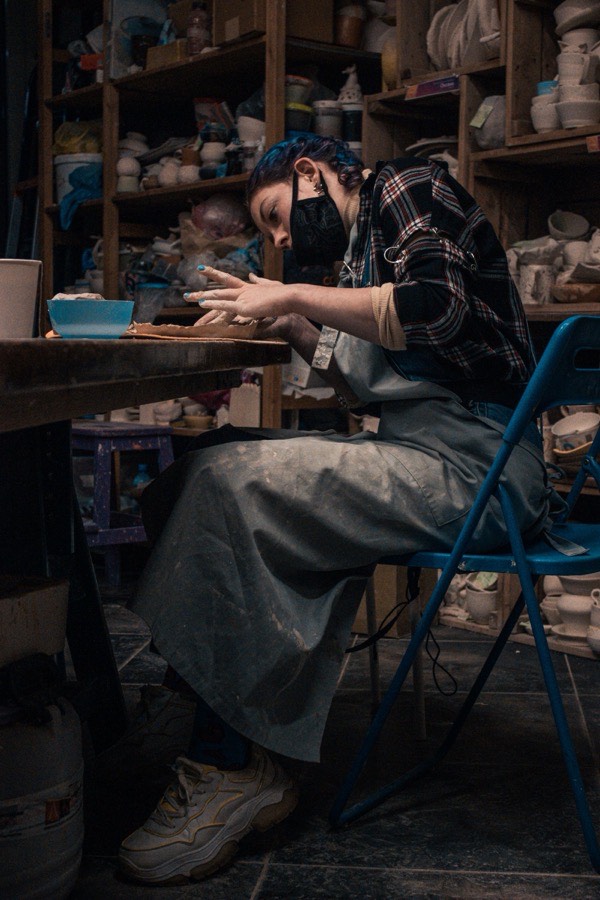
Dry clay and glaze materials, especially unfired silica and certain raw glaze ingredients, produce fine respirable dust that causes silicosis with repeated long-term exposure, a serious and irreversible lung disease. In the United States, OSHA's respirable crystalline silica standard sets a permissible exposure limit of 50 micrograms per cubic meter of air (averaged over an 8-hour shift), with a lower "action level" of 25 micrograms per cubic meter that triggers required exposure monitoring; chronic silicosis typically develops only after 10 or more years of exposure at low levels, which is part of why the risk is easy to underestimate in a hobby or teaching studio where any one session's exposure feels minor. The standard precautions are straightforward: wet-clean studio surfaces and floors rather than dry-sweeping them, which just puts settled dust back into the air; wear a proper NIOSH-approved respirator rated for fine particulates when mixing dry clay or glaze materials, or when spraying glaze, which aerosolizes material more than most other studio tasks; and keep dry-material mixing separate from general studio space where possible.
¶ Heavy metals in glazes
Historically, many glazes relied on lead and other heavy metals for color and melt behavior. Lead glazes remain a real hazard on functional ware, since lead can leach into food and drink, particularly from acidic contents, and are generally avoided entirely for anything intended to hold food. Other coloring oxides, including some forms of cobalt, cadmium, and manganese, carry their own handling and food-safety considerations. Commercially tested, food-safe glazes exist specifically to remove this guesswork for functional ware.
¶ Water and waste
Glaze and slip waste should never go down a studio drain: settled clay and glaze material clogs plumbing, and heavy-metal content can eventually reach wastewater systems. Most working studios keep a settling or reclaim system for wastewater from glazing and clean-up, and reclaim scrap clay back into usable material rather than discarding it, which reduces both waste and raw material demand.
¶ References
- Occupational Safety and Health Administration (US Department of Labor). OSHA's Respirable Crystalline Silica Standard for General Industry and Maritime. osha.gov
- Photo by Dmitry Safronov, via Pexels, Pexels License (resized and re-compressed from the original).