Silica (silicon dioxide, SiO₂) is the primary glass-forming oxide in nearly every ceramic glaze, and a major structural component of most clay bodies.
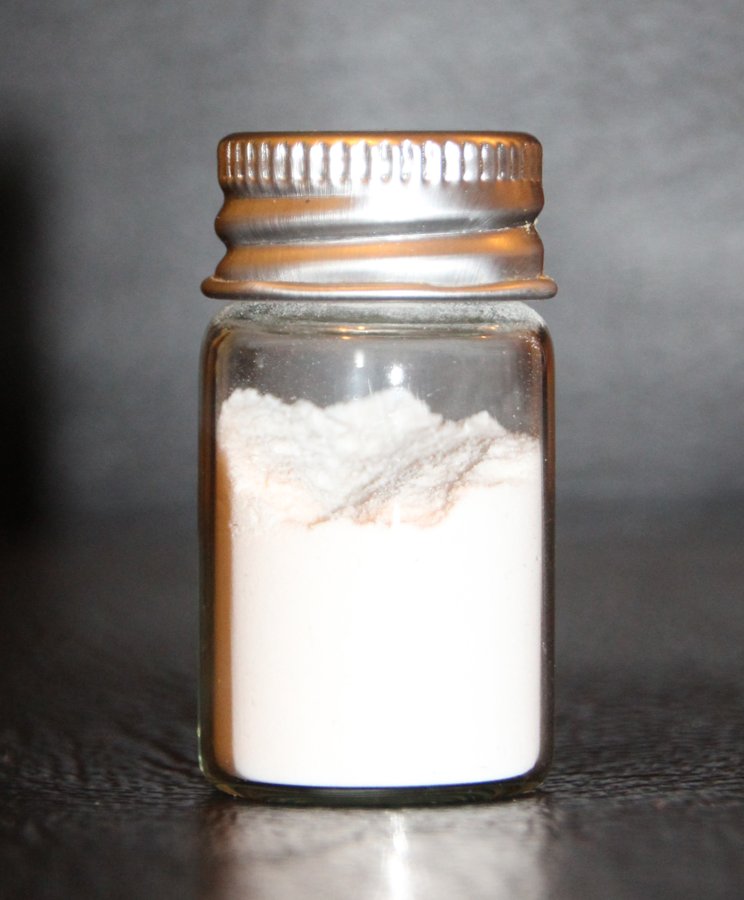
In a glaze, silica is what actually forms the glass network once melted; its own melting point is far too high for any studio firing range, which is why a flux is always needed alongside it.
Silica occurs naturally in several crystalline forms. Quartz is the form most commonly present in raw clay and glaze materials, and it undergoes a sudden, disruptive volume change around 573°C as it cools through a structural inversion, a real source of cracking risk during cooling. A separate crystalline form, cristobalite, can develop inside a clay body during high firing and undergoes its own structural inversion at a lower temperature, roughly 200 to 250°C; see the glossary entry on cristobalite inversion for more detail on both.
Silica content is one of the main levers for adjusting a glaze's thermal expansion: raising it lowers expansion and can help correct crazing, while lowering it raises expansion and can help correct shivering.
¶ Forms used in ceramics
Silica reaches a clay body or glaze recipe in a few different forms, distinguished mainly by particle size and purity rather than chemistry. Flint and silica sand are both relatively coarse, naturally occurring forms; silica flour is ground much finer, closer to a true powder. Particle size affects how readily the material reacts and melts in the kiln: a finer particle has more surface area exposed to heat relative to its volume, so it dissolves into a melting glaze more completely at a given temperature than a coarser particle of the same material would. A glaze with unmelted, oversized silica particles left in it can show that as a rough, gritty, or pitted surface rather than a smooth glass layer.
¶ References
- Hansen, Tony. "Quartz Inversion (alpha-beta)." Digitalfire Reference Library. Source for the 573°C quartz inversion and its ~0.45% volume change. digitalfire.com
- Hansen, Tony. "Cristobalite Inversion (alpha/beta)." Digitalfire Reference Library. Source for the cristobalite inversion occurring during cooling around 220–225°C. digitalfire.com
- Photo by LHcheM, via Wikimedia Commons, licensed CC BY-SA 3.0 (resized and re-compressed from the original).
