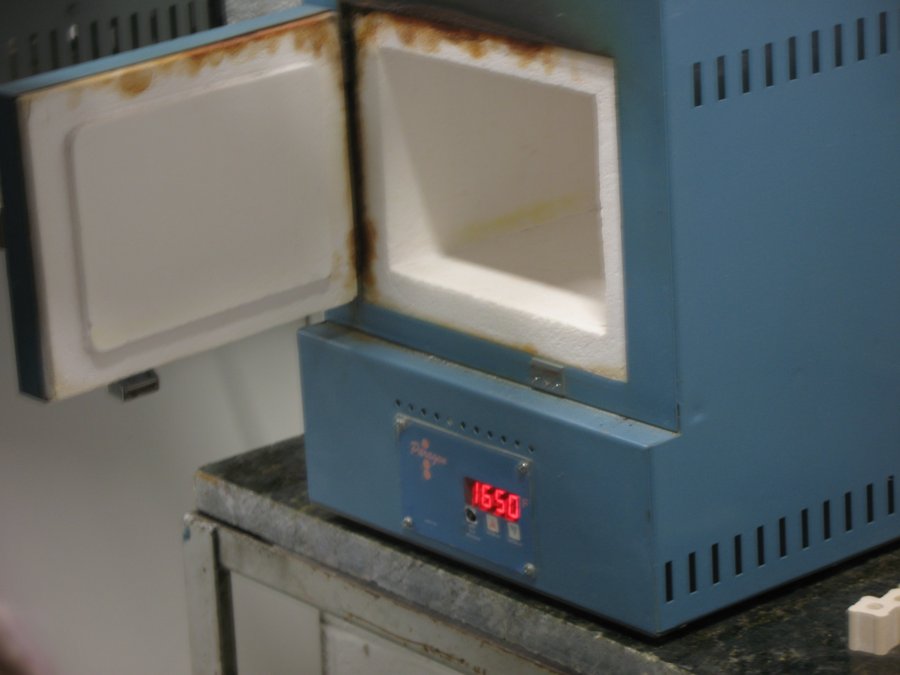
An electric kiln is a kiln heated by electrical resistance elements rather than by burning fuel. It is the most common kiln type in studio and school settings, valued for how repeatable and hands-off a firing in one can be compared to a fuel-burning alternative.
¶ How it works
Coiled metal elements, usually a nickel-chromium alloy such as Kanthal or nichrome, are set into channels in the kiln's brick or fiber lining and heat up by electrical resistance the same way a toaster's element does, radiating that heat inward to the chamber. Small kilns can run on an ordinary household 120-volt circuit, but most full-size studio kilns need a dedicated 240-volt circuit to draw enough current to reach cone 6 or higher within a practical firing time. Because no fuel is burning inside the chamber, nothing competes with the ware for the oxygen already present, so the atmosphere stays oxidizing by default (see atmospheres). A kiln sitter or, increasingly, a programmable digital controller tracks temperature through the firing and cuts power once the target is reached. The simplest, oldest control scheme is an infinite switch, a manual dial offering a handful of heat settings (commonly labeled Low, Medium, and High, or numbered increments) rather than a target temperature at all; it works by rapidly cycling the elements on and off at a ratio that sets the average power delivered, and the potter manually advances it through a firing by watching cones or a pyrometer. A digital controller instead runs a stored or programmed ramp/hold schedule against a thermocouple reading, needing no manual attention once started, which is why most modern studio kilns ship with one.
¶ Practical considerations
An electric kiln needs no fuel supply or combustion venting for the firing process itself, which is a large part of why it dominates settings where simplicity and consistency matter more than reaching the highest possible temperatures. True reduction firing is out of reach in an ordinary electric kiln without added equipment, since there is no fuel-to-air ratio to adjust; potters wanting reduction effects generally need a gas kiln instead. Elements also degrade with use and eventually need replacing, which gradually caps the practical top temperature a given kiln can still reach as it ages.
¶ References
- Photo by bptakoma, via Wikimedia Commons, licensed CC BY 2.0 (resized and re-compressed from the original).
- Photo by Pramod Tiwari, "Pile of Pottery Mugs," via Pexels, Pexels License (resized and re-compressed from the original).
