A wood kiln is a fuel-burning kiln fired with wood rather than gas or electricity, valued less for reaching temperature efficiently than for the ash-borne surface effects a long wood firing leaves on the ware itself.
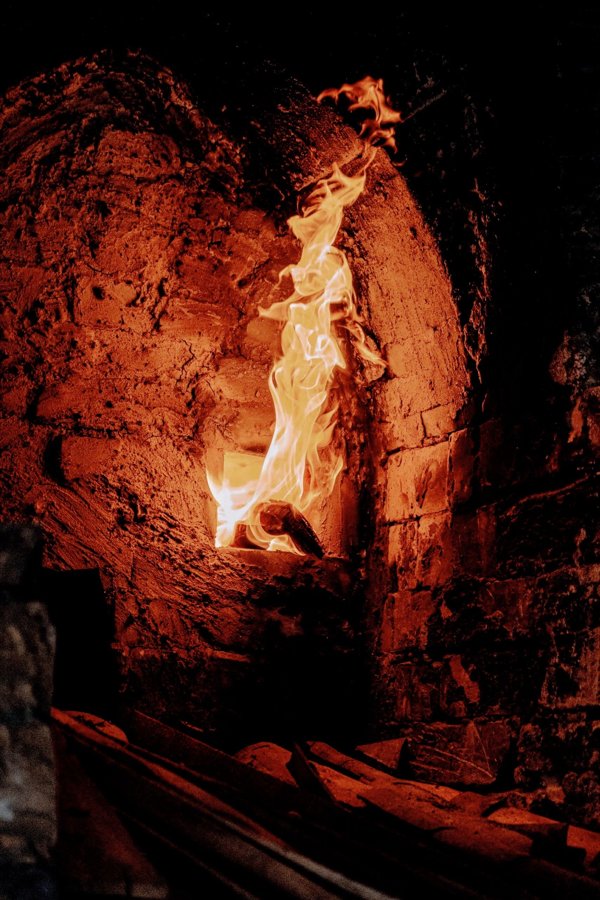
¶ How it works
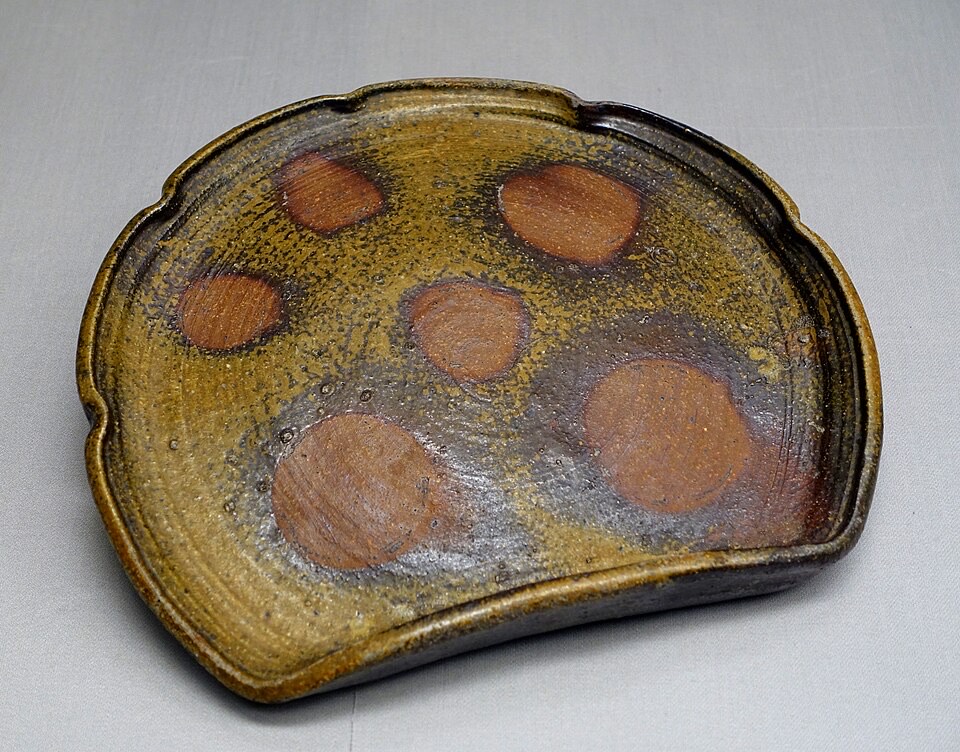
Wood is fed into the firebox continuously, sometimes for days, building up temperature far more slowly and unevenly than a gas or electric kiln managed by a controller. A full firing commonly runs 24 to 72 hours depending on kiln size and the effect sought, with a stoking crew feeding the firebox every few minutes around the clock rather than leaving it unattended the way a controller-run kiln can be. Fine ash carried in the draft settles on exposed ware throughout the firing, and at high enough temperature that ash melts, fluxed largely by its own potassium and calcium content, and fuses with the silica already present in the clay body's surface to form a genuine, if entirely unplanned, ash glaze. Where the ash lands, how thick it builds up, and how the flame path licks across a piece all vary with its exact position in the kiln, which is why wood-fired results are prized specifically for being different from piece to piece rather than repeatable.
¶ Practical considerations
Wood firing is labor- and fuel-intensive compared to gas or electric firing, typically requiring a firing crew to feed the kiln around the clock for the length of the firing, and demands a kiln built to withstand that duration and fuel load. Because the ash-glaze effect depends on exactly where a piece sits, potters loading a wood kiln plan piece placement deliberately, accepting that even careful planning still leaves the specific result somewhat up to the firing itself. Wood-firing traditions descend directly from the Chinese dragon kiln and its East Asian descendants (see kiln types' history), and survive today largely for this surface character rather than as the most practical route to a fired, vitrified body.
¶ References
- Hansen, Tony. "Wood Firing." Digitalfire Reference Library. digitalfire.com
- Photo by Pinky Huỳnh, via Pexels, Pexels License (resized and re-compressed from the original).
- Photo by Daderot, "Bowl with upturned rim, Bizen ware, Edo period," Tokyo National Museum, via Wikimedia Commons, CC0 (resized and re-compressed from the original).
