A salt kiln or soda kiln is a kiln, usually fuel-burning, into which common salt (sodium chloride) or soda ash (sodium carbonate) is introduced late in the firing to form a glaze directly on the ware's surface, rather than from a glaze applied beforehand. Salt and soda firing work by the same chemical principle and are generally treated as one kiln type with two vapor sources, soda regarded as the somewhat less corrosive and lower-emission option of the two.
¶ How it works
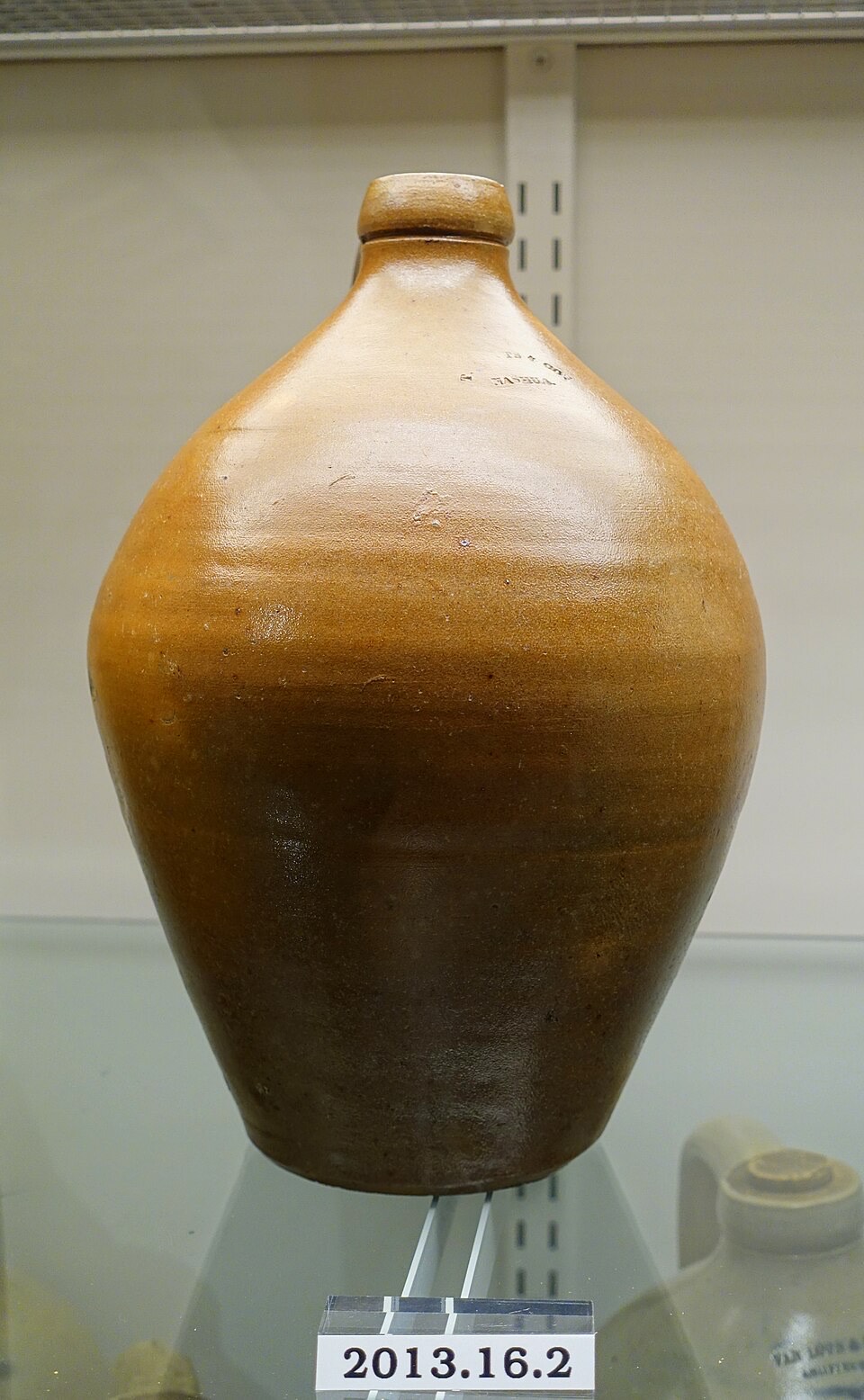
Once the kiln reaches its target temperature, commonly in the cone 8–10 stoneware range, salt or soda ash is introduced into the firebox, where the heat vaporizes it into sodium-bearing vapor that circulates through the chamber. That vapor reacts with the silica and alumina already present at the clay body's own surface, forming a thin sodium-silicate glaze in place on every exposed surface the vapor reaches, rather than requiring a glaze to have been applied beforehand. The result is a thin, often textured glaze frequently described as an "orange peel" surface, with noticeable variation from piece to piece and side to side depending on how directly the vapor reached a given surface.
¶ Practical considerations
Because the glaze forms directly from vapor reacting with whatever clay surface it touches, ware is typically left unglazed going into a salt or soda firing, and pieces are positioned with an eye toward how vapor will flow past and around them, since a shielded surface picks up less glaze than one directly in the vapor's path. Sodium vapor is also corrosive to the kiln's own brick and to shelves over repeated firings, and the fumes it produces raise real ventilation and environmental concerns, part of why soda ash is often preferred over salt specifically for its comparatively lower chlorine-gas emissions; see environmental impact for the wider studio-safety picture.
¶ References
- Hansen, Tony. "Salt and Soda Firing." Digitalfire Reference Library. digitalfire.com
- Photo by Daderot, "Jug by Thomas Crafts, Nashua, New Hampshire, c. 1838, salt-glazed stoneware," Flynt Center of Early New England Life, via Wikimedia Commons, CC0 (resized and re-compressed from the original).
