Firing atmosphere describes how much free oxygen is present in a kiln during firing, and it changes how the metal oxides in clay and glaze behave chemically, not just how hot the kiln gets.
¶ Oxidation
An oxidation atmosphere has ample oxygen available throughout the firing: the normal state inside an electric kiln, and achievable in a fuel-burning kiln by keeping the air-to-fuel ratio generous. Under oxidation, iron oxide in a clay body or glaze tends to stay closer to its ferricIron in its Fe³⁺ oxidation state, associated with reds, oranges, and browns, and the form iron favors when plenty of oxygen is available during firing. state, producing the warm reds, oranges, and browns most people associate with plain terracotta, and generally the most stable, predictable glaze colors.
¶ Reduction
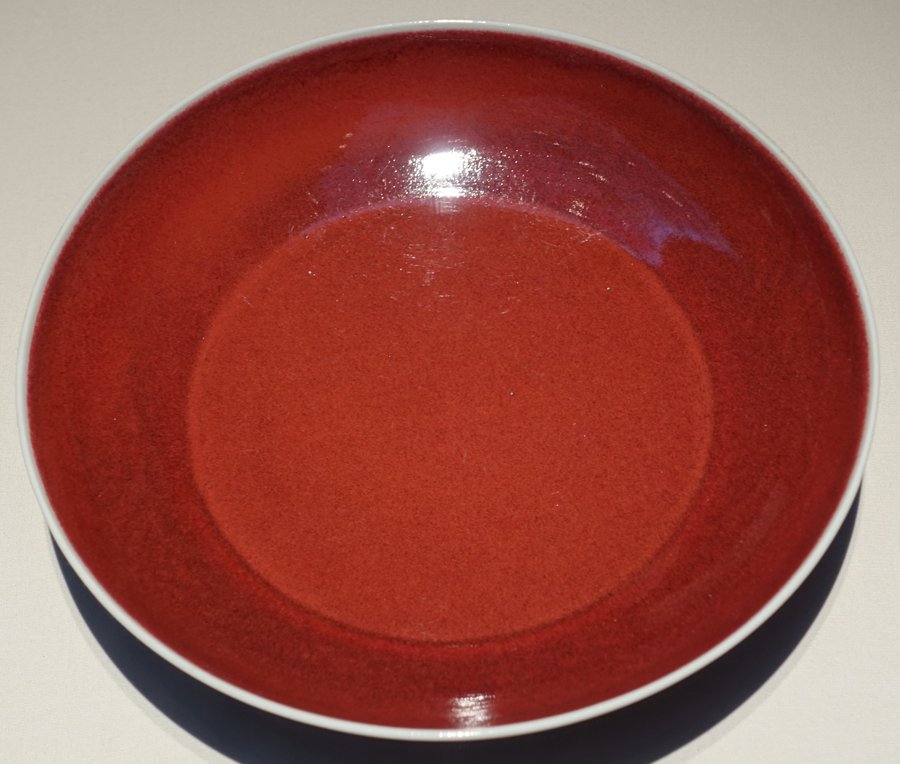
A reduction atmosphere restricts available oxygen, typically by damping a fuel-burning kiln's air intake so combustion has to pull additional oxygen from the oxides in the clay and glaze themselves. Under reduction, iron shifts toward its ferrousIron in its Fe²⁺ oxidation state, associated with greys, greens, and blues, and the form iron is pushed toward when oxygen is scarce and combustion pulls oxygen from the oxides present instead. state, which is why reduction firing produces effects (celadon greens, oxblood reds, warm greys in stoneware bodies) that are difficult or impossible to reach in oxidation with the same materials.
¶ Other oxides affected by atmosphere
Iron is not the only colorant atmosphere changes. Copper behaves even more dramatically: in oxidation, copper oxide gives greens (the color behind most traditional green glazes), while the same copper under reduction can shift all the way to red, the oxblood and copper-red effects prized in Chinese glaze history and shown above. Not every colorant is atmosphere-sensitive to the same degree, though. Cobalt is the standard counterexample: it gives a reliable, stable blue in both oxidation and reduction, which is part of why cobalt blue is such a common, dependable choice for potters who want a predictable result regardless of exactly how a kiln fires.
¶ Why atmosphere is real chemistry, not just aesthetics
The same glaze recipe can look completely different depending on atmosphere, because the atmosphere is changing which oxidation state its metal oxides actually land in as the glaze cools and sets, not just tinting the color at the surface. This is why most published glaze recipes specify an intended atmosphere as part of the recipe, not as an optional style note.
¶ References
- Hansen, Tony. "Reduction Firing." Digitalfire Reference Library. digitalfire.com
- Freer Gallery of Art, Smithsonian Institution. Collection record for the Xuande-period copper-red dish pictured above; photo by Daderot, via Wikimedia Commons, CC0 (resized and re-compressed from the original).
