Pit firing is the simplest possible way to fire ceramics: ware is buried or nested directly in combustible material, such as sawdust, straw, or dried manure, inside an open pit or an above-ground bonfire, with no enclosing kiln structure at all. It predates the built kiln by thousands of years and is capable of temperatures over 900°C on its own.
¶ How it works
Ware is packed among fuel and sometimes chemical colorants (copper or iron-bearing materials, seaweed, or other combustible additions chosen for the smoke and flame-path marks they leave) directly in a shallow pit or an open bonfire arrangement, and the fuel is simply lit and left to burn down around it. There is no chamber to hold or direct heat the way a built kiln does, so temperature, atmosphere, and how directly flame and smoke reach any given piece all vary by exact position, producing the mottled, smoke-clouded surface markings pit firing is used for today. A pit firing typically runs a few hours to burn down fully, though pieces are often left in the cooling ash overnight afterward, both to cool gradually and to let smoke continue marking the surface while everything settles.
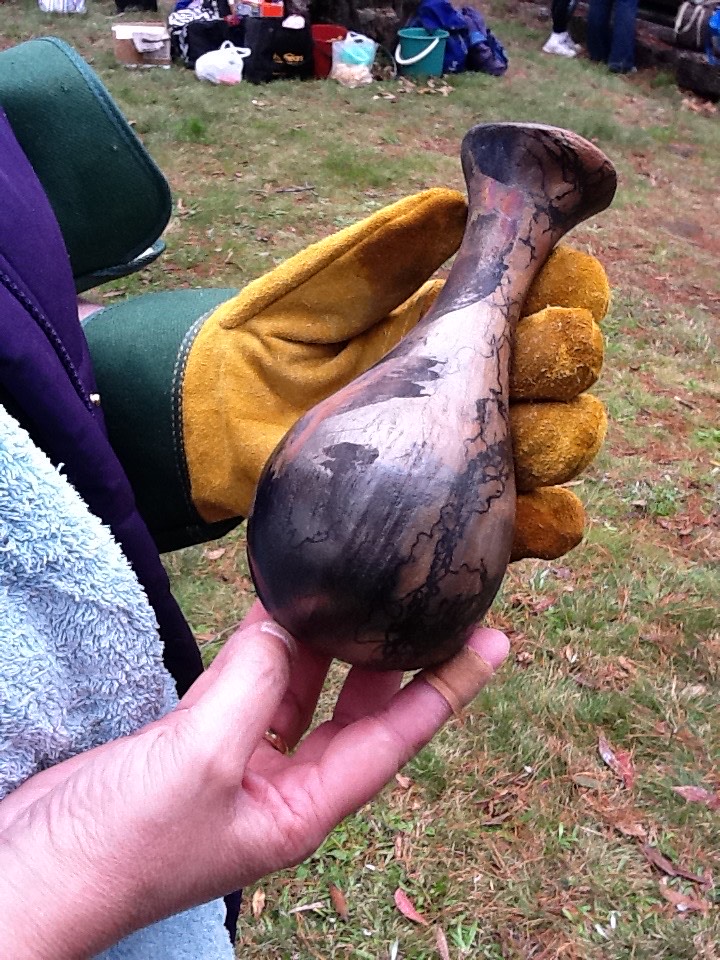
A saggar (the same fireclay container historically used to protect ware from combustion gases in a bottle kiln, see kiln types' history) offers a more controlled middle ground between an open pit and an ordinary kiln firing. Ware, combustible material, and colorants are packed inside a lidded saggar, which is then fired inside a conventional kiln rather than a pit; the smoke and flame effects stay concentrated around the piece specifically, contained by the saggar, rather than spread through the whole kiln atmosphere.
¶ Practical considerations
Pit firing survives today mainly as a deliberate, low-tech way to get unpredictable, one-of-a-kind surface markings rather than as a practical route to a fully vitrified, functional body; temperatures and atmosphere are far less controllable than in any built kiln, and results vary considerably between firings even with a carefully planned pit and fuel arrangement. Saggar firing keeps much of that same unpredictability while adding real temperature control and repeatability from the host kiln, at the cost of needing a saggar built or bought for the purpose.
¶ References
- Hansen, Tony. "Primitive Firing." Digitalfire Reference Library. digitalfire.com
- Photo by sridgway, "Robyn's awesome pot straight from the pit fire kilm," via Flickr, licensed CC BY 2.0 (resized and re-compressed from the original).