A flux is any material that lowers the temperature at which silica melts into glass. Without a flux, silica alone would need kiln temperatures far beyond what studio pottery works at, so nearly every glaze and vitrified clay body depends on flux content to become workable at a reachable temperature. Feldspar, a group of aluminosilicate minerals, is the most common natural flux source in both clay bodies and glazes, because it conveniently supplies flux, alumina, and silica all in one raw material.
¶ What a flux does
Chemically, fluxes are the oxides that most readily disrupt silica's glass network and bring its melting point down into a workable range. In the color scheme used across this wiki, flux oxides are marked in amber wherever glaze chemistry comes up, the same visual category the Seger unity calculator uses.
Ceramic fluxes fall into two broad chemical families. The alkalis, sodium (Na₂O) and potassium (K₂O), are the strongest fluxing agents per mole and the most common source of excess thermal expansion in a glaze, which is why they are the usual first suspect when diagnosing crazing. The alkaline earths, calcium (CaO), magnesium (MgO), and to a lesser extent zinc oxide, flux more gently and raise thermal expansion less, making them common levers for correcting a glaze that expands too much. Because raw materials rarely supply a single oxide in isolation, the actual flux content of a recipe is usually reasoned about through its unity formula (see the Seger unity calculator) rather than by looking at raw material names alone.
¶ Potash vs. soda feldspar
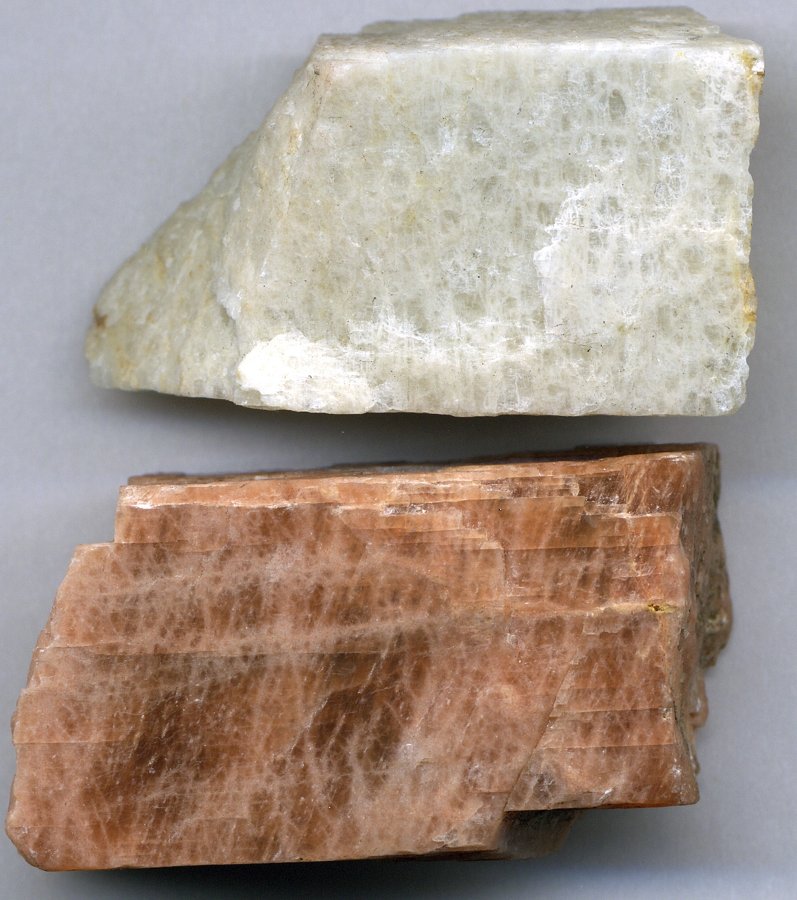
The two feldspars potters use most are potash feldspar (supplying K₂O) and soda feldspar (supplying Na₂O). They behave differently even though both are alkali fluxes: potash feldspar tends to produce a stiffer, more viscous melt and a slightly higher softening point, while soda feldspar melts more readily and produces a more fluid glaze. Both raise a glaze's thermal expansion more than most other flux sources, which is why alkali fluxes are the usual first suspect when diagnosing crazing.
¶ Flux power is not equal across fluxes
Different flux oxides lower silica's melting point by different amounts per mole, a property sometimes called flux power or flux strength. Lithium is generally the most powerful common ceramic flux by this measure, followed by sodium and potassium, with the alkaline earths (calcium, magnesium) and zinc trailing well behind. This is why a recipe can often be pushed to melt at a lower temperature by substituting a small amount of a stronger flux rather than adding a larger amount of a weaker one, though flux power is only one factor among several (melt fluidity, thermal expansion, cost, color response) that actually decide which flux belongs in a given recipe.
¶ Other common fluxes
Feldspar is not the only flux in circulation. Whiting (calcium carbonate, supplying CaO), talc (supplying MgO), zinc oxide, lithium sources, and boron sources (such as gerstley borate) all act as fluxes too, generally with a gentler effect on thermal expansion than the alkalis (boron behaves somewhat differently again, acting partly as its own glass former).
Nepheline syenite, a feldspathoid mineral rather than a true feldspar, is often used as a substitute for soda feldspar when a stronger, lower-temperature flux is wanted from the same general family: it carries less silica and more alkali than feldspar for a given weight, so it fluxes more powerfully and can push a recipe's melting point down further without changing which other materials are in the mix.
¶ References
- Hansen, Tony. "Fluxes." Digitalfire Reference Library. Source for the relative flux-power ranking (lithium strongest, then sodium, then potassium, with the alkaline earths trailing well behind). digitalfire.com
- Photo by James St. John, via Wikimedia Commons, licensed CC BY 2.0 (resized and re-compressed from the original).
.jpg)