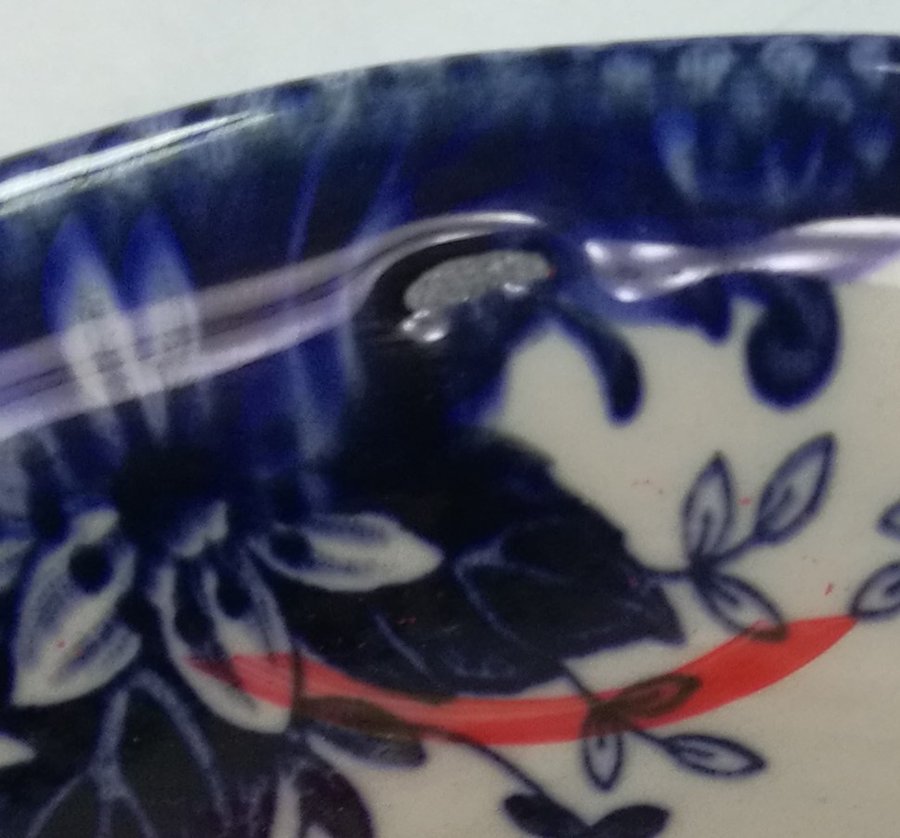
Crawling is a glaze defect in which the glaze pulls apart during firing, leaving bare patches of exposed clay body surrounded by pulled-back, often beaded-up glaze. Unlike crazing or shivering, crawling is not a thermal-expansion fit problem: it concerns the glaze failing to stay stuck to the body in the first place, either before or during melting.
¶ Common causes
The most frequent cause is contamination: dust, oil, or grease on the bisque surface before glazing, which keeps the glaze from wetting evenly. Applying glaze too thickly is another common cause. A thick, dry glaze layer can develop shrinkage cracks before it ever reaches the kiln, and once molten, surface tension pulls those cracked segments back into beads rather than letting them re-flow flat. Underfired or otherwise overly dusty, powdery bisque can also fail to hold a glaze layer properly during handling and firing.
¶ Prevention
The standard countermeasures track the causes directly: keep bisque clean and handle it with clean hands before glazing, avoid glaze applications thicker than the recipe calls for, and make sure bisque is fired hot enough to hold together as a stable surface. Glazes with a lot of raw plastic clay in the recipe are also more prone to crawling, since that clay content is what shrinks and cracks in the dry, unfired glaze layer.
¶ References
- Hansen, Tony. "Glaze Crawling." Digitalfire Reference Library. digitalfire.com
- Photo by Encik Tekateki, via Wikimedia Commons, licensed CC BY-SA 4.0 (resized and re-compressed from the original).
